

- Choose a seed creator for a specific, observable reason.
- Content similarity does not establish shared audiences or matching sales potential.
- Keep a separate exploration group to avoid repeating one narrow creator profile.
What is lookalike creator search?
Lookalike creator search starts with a reference creator and helps you discover other creators with relevant similarities. It is useful when you can point to a good example more easily than you can describe an entire niche. The important question is which similarity matters: topic, demonstration style, setting, or another observable feature.
Do not confuse creator lookalikes with an advertising lookalike audience. A similar creator profile does not prove that two accounts reach the same people, have comparable conversion rates, or offer the same collaboration terms. Treat every match as a new candidate.
Choose a seed with a clear reason for fit
Start with a creator whose work you can explain in a sentence. For a portable blender, a useful seed might regularly show the preparation, blending, and cleanup of breakfast recipes. A creator with one viral smoothie clip and otherwise unrelated content provides a weaker foundation for that particular brief.
Check whether the seed represents repeated behavior or a one-off post. If you already worked together, separate the creator’s contribution from discounts, paid distribution, seasonal demand, or unusually favorable product availability. Successful campaign results can suggest a hypothesis; they do not establish why the campaign succeeded.
A practical workflow for finding similar creators
- Write the seed hypothesis. Record the behavior you want to find again and a video that demonstrates it.
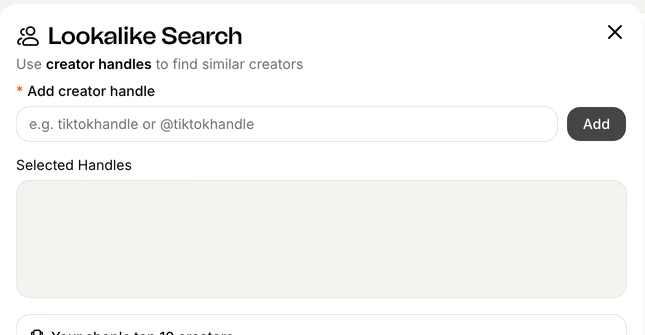
- Start a lookalike search. Use the reference creator in Quacko Lookalike Search and inspect the initial candidates.
- Review the relevant content. Ask whether the similarity appears in repeated posts or only in profile presentation.
- Check campaign constraints. Verify market fit, product suitability, contact route, and any data gaps independently.
- Save the evidence. Keep a content link, the seed used, a fit note, and the reason to contact each creator.
- Deduplicate before outreach. Check existing lists and prior conversations so another teammate does not send a duplicate invitation.
Example: expand a small-kitchen creator shortlist
Imagine a brand selling a compact food-storage set. Its seed creator demonstrates practical kitchen organization in a small apartment. Build one candidate group around space-saving routines and another around meal preparation. Both can fit the product, but they offer different explanations of its value.
A candidate who films attractive countertop tours may resemble the seed visually while rarely demonstrating a product. A less visually similar creator who repeatedly explains storage capacity and cleaning could be a better test. Keep those judgments in the record instead of accepting similarity as the final decision.
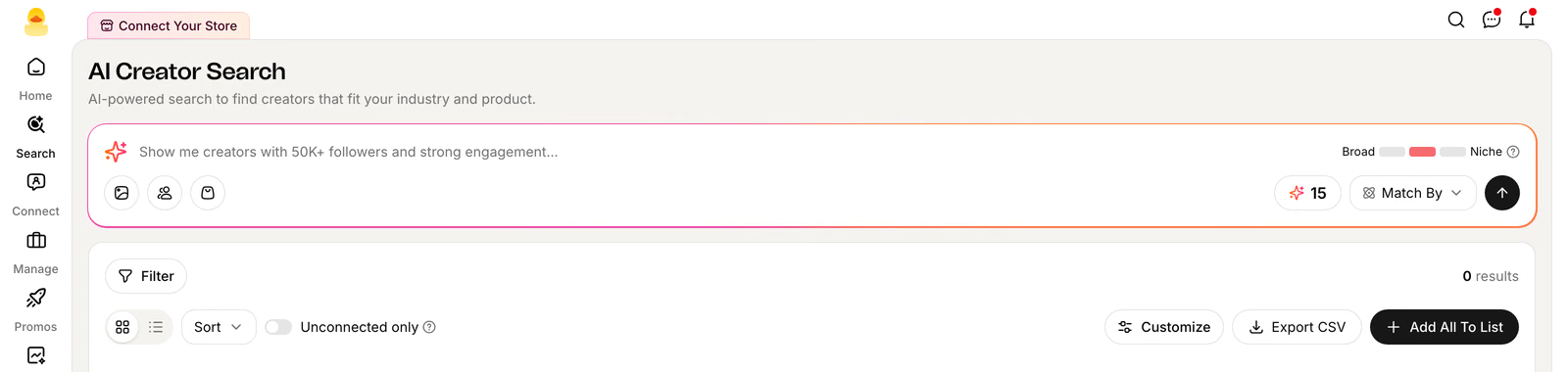
When lookalikes repeat the same accounts or drift from your use case, switch to a descriptive AI search prompt. Search “creators who show leftovers being portioned and stored in small refrigerators,” then compare those candidates with the seed-based group.
Test whether similarity helps your program
Build a small lookalike group and a separate discovery group using the same qualification rules. For an illustrative pilot, you might review ten candidates in each group; that is a manageable workflow example, not a sample size that proves statistical significance. Keep the product and invitation comparable, and record differences you cannot control.
First compare the share of reviewed candidates who qualify. After outreach, compare positive replies per contacted creator. Later, track accepted partnerships and published content over the same observation window. Do not count a creator who has not yet received a sample as a failed publisher.
Use your creator program dashboard to keep these stages separate. If lookalikes qualify quickly but decline the offer, investigate terms and timing before concluding that discovery failed.
Keep room for new types of creators
Repeatedly expanding from one seed can narrow your shortlist around the same format. Use more than one justified seed and keep an exploration list for adjacent use cases. Record whether an account was previously contacted, unavailable, or unsuitable so it does not keep re-entering the workflow.
TikTok describes niche, audience, and budget as dimensions for finding creators in its TikTok One overview. That supports checking multiple dimensions of fit; it does not mean a lookalike result has independently passed those checks.
Frequently asked questions
Do I need a past campaign winner as my seed?
No. You can start with a creator whose content fits the brief. Label the fit as a hypothesis until you have campaign evidence.
Should I contact every similar creator?
No. Review each candidate against your product and campaign requirements, then check previous contact history before sending an invitation.