


- Describe observable content, the product use case, and the intended audience.
- Change one search condition at a time so you can explain what improved.
- Treat search results as candidates to review, not verified campaign partners.
What should an AI creator search prompt include?
A useful AI creator search prompt describes what a creator makes, how your product fits that content, and the context in which someone would buy it. Start with a visible behavior such as “demonstrates meal prep in a small kitchen.” Add audience or market requirements with filters where available. A phrase such as “high-converting influencers” gives you little concrete evidence to check.
Use this structure: Find creators who [observable content behavior] for [buyer context], featuring [product or use case]. Prioritize [content format]. Keep commercial requirements in your review checklist when the search tool cannot verify them. A prompt cannot establish a creator’s availability, current partnership terms, or willingness to promote your product.
Eight prompts you can adapt
These are illustrative starting points, not tested performance claims. Replace the product and audience details before searching.
- Kitchen tools: Find creators who demonstrate compact kitchen tools while preparing everyday meals in small kitchens. Prioritize hands-on explanations and cleanup demonstrations.
- Beauty accessories: Find creators who show makeup brush application and cleaning routines, with close-up demonstrations that explain how each tool is used.
- Fitness equipment: Find creators who demonstrate beginner home workouts with portable equipment. Prioritize clear setup instructions and modifications for limited space.
- Pet accessories: Find creators who show practical dog-walking routines and demonstrate how they carry, store, or clean everyday pet accessories.
- Apparel: Find creators who style one basic clothing item in several outfits and explain fit, fabric, and sizing with try-on footage.
- Home storage: Find creators who organize small apartments using removable storage products and show the installation process from start to finish.
- Travel products: Find creators who demonstrate carry-on packing routines and explain how individual accessories save space or keep items accessible.
- Product comparisons: Find creators who compare everyday desk accessories by showing the same task with each product and explaining practical tradeoffs.
Choose the evidence you want to match
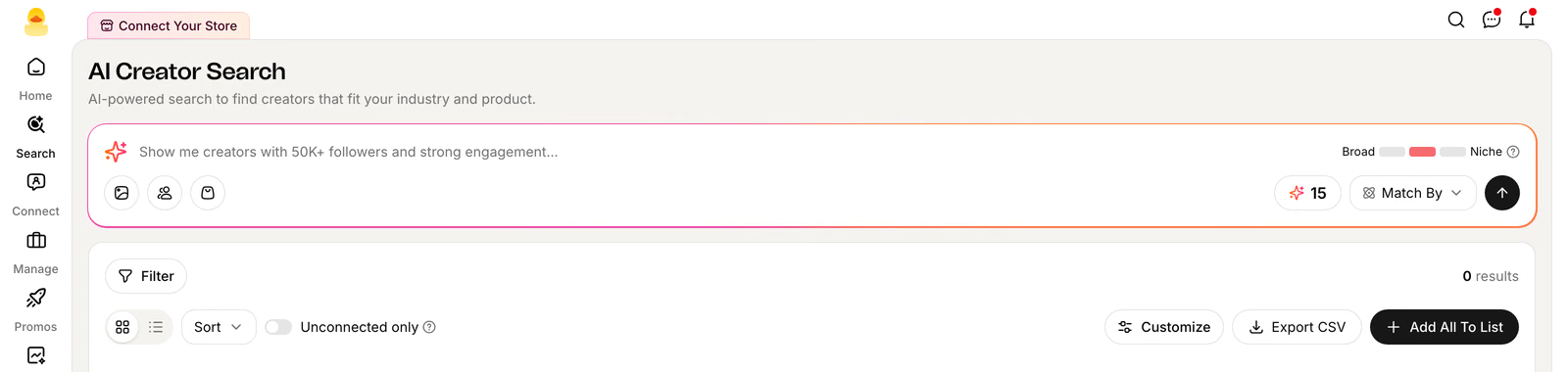
Quacko’s AI Creator Search offers matching controls for bio text, video content, transcripts, and visuals. Use bio matching when a stated specialty matters. Use content or transcript matching when you need a repeated topic or explanation. Visual matching can help with a filming environment or demonstration style.
For example, a kitchen-tool brief may need visible preparation footage more than a profile that calls itself a “food creator.” Review the resulting videos to confirm the tool is actually used. A matching score is a discovery signal; it does not verify audience demographics or future sales.
Fix broad, narrow, or irrelevant results
If results are broad, replace abstract adjectives with actions. Change “authentic lifestyle creators” to “creators who show a weekly apartment reset and demonstrate the storage products they use.” If results are too narrow, remove one preference, such as a specific room style, while retaining the product use case.
If a relevant creator disappears after adding a filter, inspect the reason. Missing data and a confirmed mismatch are different. Record the original query, one changed condition, and the effect on your shortlist. Avoid changing the query, market, and every performance threshold together, because you will not know which change helped.
Turn search results into an evidence-backed shortlist
Review a consistent sample of recent posts for each candidate. Save a representative video link, a one-sentence reason the product fits, an unresolved question, and the next action. For a storage product, useful evidence might be “shows installation in rental apartments”; “nice aesthetic” is too vague to guide an outreach message.
Use the creator scorecard to compare candidates. Track qualification rate as reviewed candidates who meet your stated criteria divided by all candidates reviewed. This measures search usefulness, not sales performance. Once you have several strong examples, expand with lookalike creator search.
Frequently asked questions
Should every requirement go into the prompt?
No. Put content intent in the prompt and use supported filters for structured constraints. Confirm commercial terms directly with the creator.
Can AI search guarantee a creator will sell my product?
No. Product fit, the offer, creative execution, and audience response still need testing. Search helps you choose whom to investigate.